Box Escape: Survival Launcher
- 4.3
- Rating
- 1.00M
- Installs
- Free
- Price
 Analysis by App-foxy
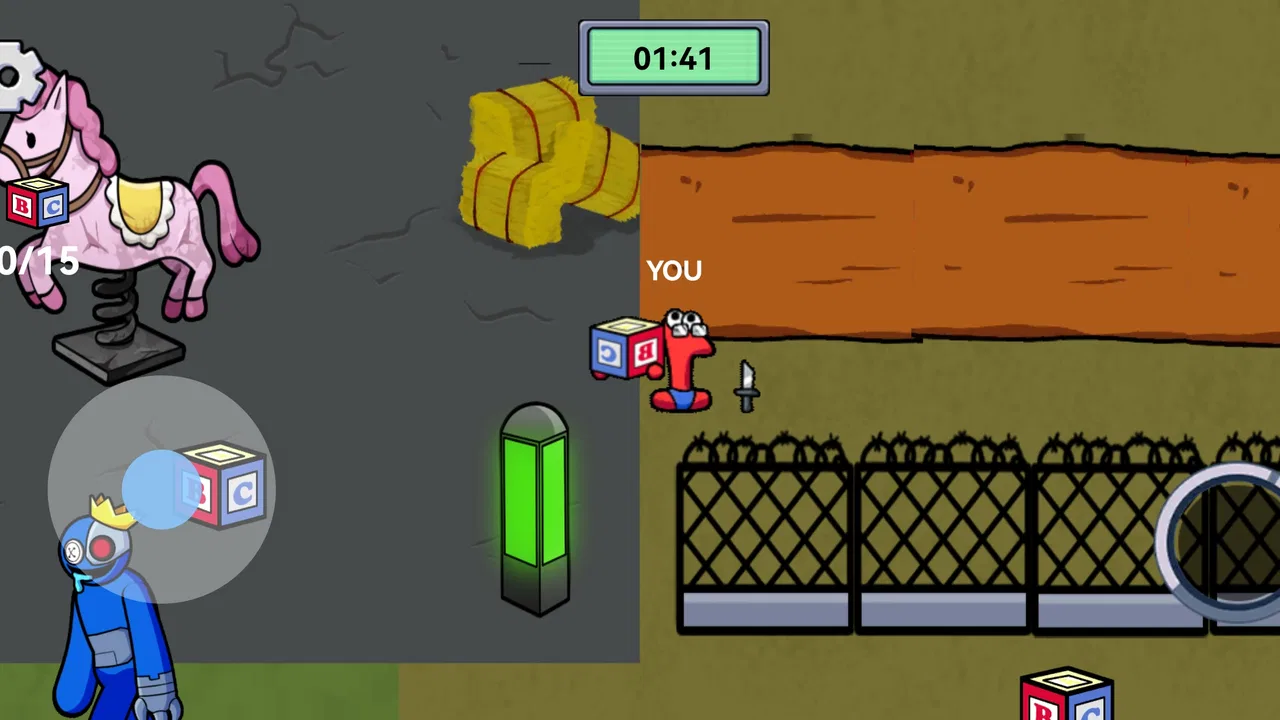
I spent time with Box Escape: Survival Launcher and found a compact role-playing game built around a simple but surprisingly tense idea: move boxes into safe positions while trying not to get caught by hungry monsters. It is free to play, rated for Everyone, and made by torsopolecats. The premise is easy to understand in seconds, but the pressure comes from deciding whether to solve the box puzzle quickly or take a safer route that gives the monsters less chance to corner you.
That combination makes it different from a standard action game. You are not simply running toward a finish line, and you are not managing a large character sheet full of equipment and statistics. Your attention stays on the immediate space around you: where a box can go, which path remains open, and whether moving now will leave you trapped later. I would recommend it to someone who enjoys short bursts of puzzle-solving with a light survival feeling rather than a long, story-heavy role-playing adventure.
How the current game feels to play
The strongest part of the experience is the way ordinary movement becomes a small tactical decision. A box may look close to safety, but pushing it too early can block the route you need a moment later. At the same time, waiting too long gives the monsters more opportunity to turn a manageable situation into a chase. I found myself scanning the area before making a move instead of rushing automatically, which gives the simple controls more depth than the store summary suggests.
You May Also Like

 Blood Strike: 2.5 Anniversary
Blood Strike’s Loadouts Turn Every Drop Into a Tactical Gamble
A close look at Blood Strike’s custom loadouts: how fast access to signature weapons reshapes its battle royale rhythm, rewards preparation, and narrows the gap between fights.

 Pandora - Music & Podcasts
Pandora’s Music Is Easy to Start, but Harder to Recover
Pandora’s strength is its low-effort path from a seed to a station. Its weak spot is how much confidence it asks you to place in connection, setup, and quiet recovery.

 8 Ball Pool
 Is Built on Rivalries, Rematches, and Routine
A close look at the rivalries, rematches, shared routines, and unanswered safety questions that turn a quick pool match into a persistent mobile community.

 Samsung Music
’s Quiet Strength Is Playing What You Already Own
Its reach comes less from spectacle than from dependable access to a personal library. That simplicity is both the app’s strongest retention engine and its ceiling.

 AccuWeather: Weather Radar
AccuWeather Review: A Quick, Clear Forecast for Everyday Decisions
For everyday plans, the best forecast is the one you can understand quickly. AccuWeather makes rain timing, radar, and local conditions easy to act on, with a few trade-offs.

 Hill Climb Racing
Why Hill Climb Racing Still Turns Crashes Into One More Run
A tiny car, a bumpy hill and one more upgrade: Hill Climb Racing keeps resurfacing because its simple chaos makes every near-miss feel personal.
More From Our News Desk



The game’s appeal depends on that balance between planning and urgency. If it were only a box-pushing puzzle, the pressure would be easier to ignore. If it were only a monster escape game, the box objective could feel like an interruption. Here, the two tasks compete for your attention. I might know exactly where a box belongs, yet still choose to reposition myself first because the direct route feels dangerous.
That makes each attempt useful even when it ends badly. A failed run can show that I approached a box from the wrong side, left myself without a retreat, or spent too much time trying to make a perfect move. The lesson is practical rather than abstract: next time, I can create an escape lane before committing to the push. This is one of the game’s less obvious strengths, because it encourages improvement through spatial awareness instead of demanding complicated controls.
A good fit for short play sessions
I see this as a game for the moments when I have enough attention for a challenge but not enough time for a lengthy role-playing session. It works well as a quick break, especially because the central objective is immediately understandable. You do not need to learn a large world before making your first meaningful decision. The action begins with a clear purpose, and the tension comes from how well you execute it.
That simplicity also makes it approachable for younger players. The Everyone age rating matches the non-graphic, easy-to-understand premise. Even so, the presence of monsters means the game is not completely calm. The threat is presented as pressure rather than mature horror, so I would describe the mood as playful danger rather than frightening survival.
For a realistic everyday scenario, imagine waiting for a bus or taking a short break between tasks. I would play one attempt, notice the mistake that caused the failure, and decide whether I had enough time for another. The game suits that rhythm better than a role-playing title that expects me to remember a complicated quest, return to a hub, or spend a long session rebuilding a character.
What makes the box objective more interesting
The boxes are not merely items to collect on the way out. They shape the route itself. A careless push can remove a useful barrier, close a corridor, or force a longer path around the area. My practical advice is to treat every box as part of the level’s geometry. Before pushing, check where you will stand afterward and whether you still have a clear direction to retreat.
A second useful habit is to separate safe progress from desperate progress. If a box is already close to its destination, I would avoid making extra movements around it just to save a few seconds. The monster threat makes unnecessary repositioning costly. Conversely, when a box is blocking the only comfortable route, moving it early can be worthwhile even if it does not immediately advance the objective.
The best decisions are often not the fastest ones. I found that a controlled sequence—observe, create space, move the box, then escape—was more reliable than reacting to the monster only after it was already close. This is the kind of small workflow that a generic description cannot explain, but it makes a real difference when the level becomes crowded or a push leaves less room than expected.
Controls, learning curve, and pressure
The basic concept is friendly, but the game still asks for care. Box-pushing puzzles punish imprecise planning because a single movement can change the available route. The survival element adds another layer: you may understand the correct solution but lack the time to perform it comfortably. That combination creates a gentle learning curve at first, followed by moments where patience matters more than speed.
I would not approach it expecting the relaxed pace of a traditional logic puzzle. The hungry monsters mean that thinking has to happen while the situation is developing. Players who enjoy immediate feedback and repeated attempts will probably appreciate this. Players who want to examine every possibility without interruption may find the pressure frustrating, because the threat changes the value of otherwise sensible moves.
One way to make the experience less stressful is to plan the final escape before completing the box task. It is tempting to focus on the last required push and assume the exit will take care of itself. I found it safer to leave a usable route open, then finish the objective from a position that did not require crossing the most dangerous part of the area. That approach sacrifices a little speed but reduces avoidable failures.
Version 1.0.8 and the experience for returning players
The current version is 1.0.8, and the game has already reached more than a million installs. Its average rating is 4.1 from around 1.2 thousand ratings, with 23 written reviews shown alongside that score. Those figures suggest that the concept has found a sizeable audience, while the rating also leaves room for different reactions to the balance between puzzle planning and monster pressure.
Because the available release information identifies the current build and its release point but does not describe a detailed change log, I would avoid assuming that every update introduced a particular mechanic or improvement. What I can say is that version 1.0.8 is the build I would judge today. If you played an earlier release, the fairest comparison is to install the current version and see how its movement, pacing, and overall responsiveness feel on your device rather than relying on memories of an older session.
The game was released on April 13, 2026, so it is still useful to think of this as an early stage in its product life. That does not make the present version unplayable; the core loop is already clear and enjoyable. It does mean I would separate what exists now from what might arrive later. New levels, tuning changes, or additional variety would be welcome possibilities, but they should not be treated as current features when deciding whether to download it.
For existing users, the important question is whether the central loop remains satisfying after the initial discovery. In my experience, it does when I enjoy refining routes and learning from mistakes. The game is less convincing if I need constant novelty, a large progression system, or a strong narrative reason to continue. The current build’s value comes from replaying the same kind of decision-making with better judgment, not from pretending it is a full-scale role-playing campaign.
Where it stands beside familiar alternatives
Compared with a conventional box-pushing puzzle, this game adds urgency and makes route planning more emotionally immediate. A normal puzzle lets me stop and calculate without a pursuing threat. Here, the monster changes the question from “What is the correct solution?” to “What is the safest solution I can execute before the situation closes in?” That will appeal to players who find pure logic games too quiet.
Compared with an action survival game, the box objective gives my movement a purpose beyond simply staying alive. I cannot focus only on dodging; I have to make progress toward a concrete task. The trade-off is that it may feel less fluid than a game built entirely around chasing, combat, or free movement. If your favorite survival games are about collecting resources, building a base, or developing a powerful character, this is a much more focused experience.
It also differs from larger role-playing games because the role-playing label here should not set expectations for an elaborate story or deep character customization. I would choose this title over a traditional RPG when I want a quick tactical challenge. I would choose the traditional RPG instead when I want exploration, dialogue, equipment decisions, or a long-term character arc. Knowing that distinction prevents disappointment and makes the game’s compact design easier to appreciate.
Limitations that matter before downloading
The biggest limitation is also the game’s identity: the core idea may not suit someone who dislikes repetition. Once the basic relationship between boxes, safe routes, and monsters is understood, enjoyment depends on whether improving execution feels rewarding. If you need frequent changes in objectives or a broad variety of play styles, the focused design could become narrow.
The pressure can create another kind of friction. A move that would be perfectly reasonable in a calm puzzle can fail because the monster arrives at the wrong moment. Some players will enjoy that tension, while others may feel that the game interrupts their thinking. I would skip it if I specifically want a meditative box puzzle with no time pressure or threat.
There is also a difference between being accessible and being effortless. The premise is easy to grasp, but safe box placement still requires attention. Younger players may understand what to do yet need practice to recognize dead ends and escape routes. I would introduce it as a game of planning under pressure, not as a completely casual tap-and-go experience.
Device compatibility is straightforward for many Android users because the minimum operating system is Android 8.0. The game is free, which lowers the barrier to trying it, but I would still approach the download as a test of personal fit rather than an automatic recommendation. The absence of an upfront price does not change the fact that the gameplay style is quite specific.
What I would watch as the game develops
For future updates, I would pay attention to how torsopolecats expands the experience without weakening its central tension. More variety would be useful if it created new ways to think about box placement and escape routes. Simply adding more of the same would help players who already enjoy the loop, but it might not solve the narrowness that could affect everyone else.
I would also watch the balance between planning time and monster pressure. The best version of this concept gives me enough room to make meaningful decisions while still making hesitation dangerous. If the threat becomes too forgiving, the survival identity loses strength. If it becomes too aggressive, the box puzzle can feel secondary because I am only reacting to pursuit.
Returning players should judge updates by the quality of that balance rather than by version numbers alone. A higher build number is useful context, but the real question is whether the current game makes each failure understandable. When I can identify the unsafe push or the missed escape route, I feel motivated to try again. When a failure feels arbitrary, repetition becomes much less appealing.
My final view is positive but specific. Box Escape: Survival Launcher is worth trying if you like compact role-playing games that mix spatial puzzles with immediate danger. I especially recommend it to players who enjoy learning routes, making careful pushes, and improving through short repeated attempts. It is not the right choice for someone seeking a deep story, extensive character development, or a completely relaxed puzzle environment.
As a free game from torsopolecats, it offers an approachable way to test whether this unusual combination works for you. I would begin by playing slowly, treating each box as part of the escape plan rather than as a simple objective. If that habit makes the tension satisfying, the current version has a clear reason to stay installed. If the pursuing monsters make every puzzle feel rushed, a traditional box-pushing game will probably be the better alternative.
FAQs for Box Escape: Survival Launcher
01What is Box Escape: Survival Launcher about?
Box Escape: Survival Launcher is an arcade survival game centered on launching, dodging, and escaping through increasingly challenging stages. You typically control a box-like character or launcher, avoid hazards, and use timing to progress. The appeal comes from short attempts, quick reactions, and learning from failure, making it suitable for casual players who enjoy simple controls with progressively more demanding challenges.
02Is Box Escape: Survival Launcher free to download and play?
The game is generally presented as a free download, allowing players to try its core gameplay without paying upfront. However, availability of advertisements, optional purchases, extra lives, cosmetic items, or other paid features can vary by platform and version. Before installing, it is worth checking the store listing for in-app purchase details and reviewing the permissions requested by the current release.
03Does Box Escape: Survival Launcher work offline?
The main gameplay may be playable without a constant internet connection, which is useful for short sessions while traveling or when mobile data is unavailable. Nevertheless, an internet connection may still be required for advertisements, analytics, updates, cloud-related features, or purchases. I recommend opening the game once online after installation, then testing its essential levels in airplane mode.
04Is Box Escape: Survival Launcher suitable for children?
The game’s simple arcade mechanics can make it accessible to younger players, but parents should still check the age rating and store information for the specific device version. Fast obstacles and repeated failures may be frustrating for some children. Also review advertising and in-app purchase settings, since free games can display promotional content or offer optional purchases during play.
05What devices are required to play Box Escape: Survival Launcher smoothly?
Box Escape: Survival Launcher is designed for mobile devices, but the exact Android or iOS requirements depend on the version available in the relevant store. A relatively recent operating system, sufficient free storage, and updated system services should provide the best experience. If the game stutters, crashes, or responds slowly, closing background apps and installing updates may help.
Pros
- Simple controls make it easy to start playing immediately.
- Short escape attempts work well for quick gaming sessions.
- Survival-focused gameplay creates constant pressure and urgency.
- Compact download size is suitable for devices with limited storage.
- The basic mechanics are easy to understand without lengthy tutorials.
Cons
- Gameplay may become repetitive after mastering the main escape patterns.
- Difficulty can feel abrupt during later survival attempts.
- Limited variety may reduce long-term appeal for experienced players.
- Ads may interrupt the flow between attempts or during progression.
- Performance can vary on older Android devices or low-end hardware.

Box Escape: Survival Launcher
Gallery